
Fun Facts About Food
Everything on your plate has a history, and quite a lot of it is stranger than the recipe suggests. Forty facts about what we eat, where it came from and what it used to be.
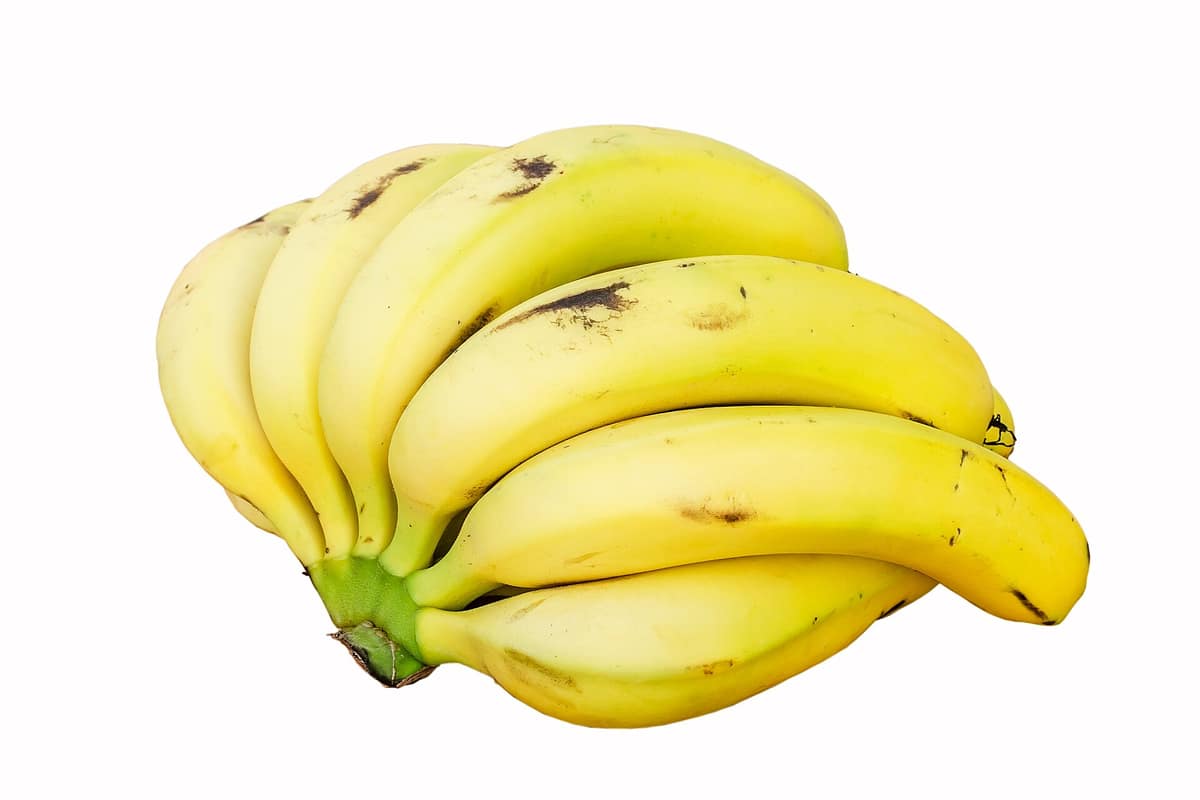
Botanically, a banana is a berry: a fleshy fruit developed from a single ovary with seeds inside. A strawberry is not, since its seed-like specks are the actual fruits and the red flesh is swollen flower tissue.
Source: Encyclopaedia Britannica
Botanically a berry. The strawberry, which is not, has never been asked to explain itself. Photo: Augustus Binu : flickr An avocado is a single-seeded berry. The oily green flesh is fruit pulp, which is why avocado behaves less like a vegetable and more like a very rich fruit in the kitchen.
Source: Encyclopaedia Britannica
Fresh pineapple contains bromelain, an enzyme that breaks down protein, so it will stop gelatin from setting. Canned pineapple works fine because the heat of canning destroys the enzyme.
Apple seeds do not grow into copies of the parent tree; each seedling is a genetic lottery ticket. Every commercial apple variety is therefore propagated by grafting cuttings onto rootstock, which makes a Granny Smith orchard effectively one enormous clone.
Cranberries have tiny air pockets inside them and float, which is why growers flood their bogs at harvest and skim the fruit off the surface. The berries are not grown underwater the rest of the year.
Source: USDA
In 1893 the United States Supreme Court ruled in Nix v. Hedden that the tomato counts as a vegetable. The court accepted that it is botanically a fruit and decided that customs tariffs should follow kitchen usage instead.
Source: US Supreme Court, Nix v. Hedden (1893)
Potato plants were grown aboard the space shuttle Columbia in 1995 as part of a NASA experiment with the University of Wisconsin, making the potato one of the first food crops cultivated in orbit.
Source: NASA
Cabbage, kale, broccoli, cauliflower, kohlrabi and Brussels sprouts are all the same species, Brassica oleracea. Centuries of breeding simply pushed different parts of one wild plant to overdevelop.
Source: Encyclopaedia Britannica
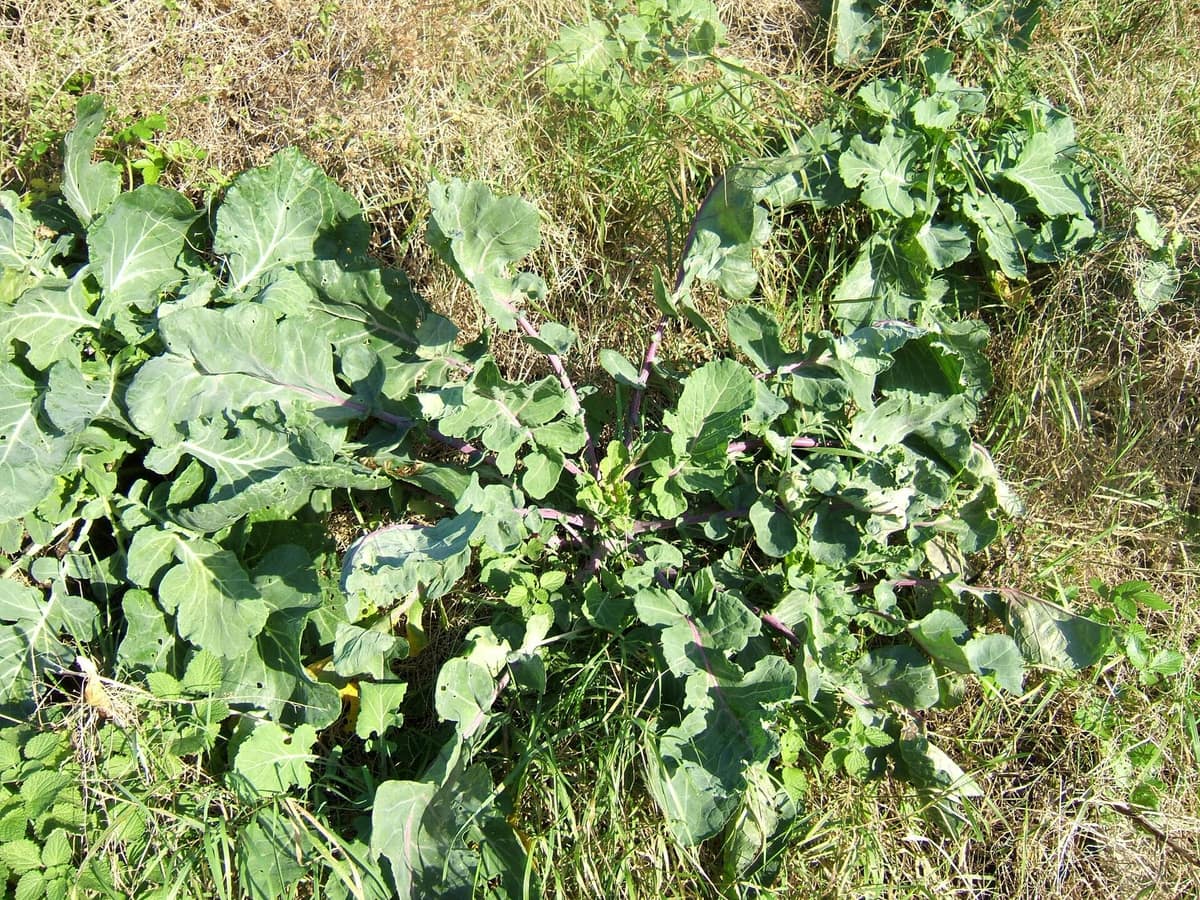
Wild cabbage. Broccoli, kale, kohlrabi and Brussels sprouts are all the same species. Photo: MPF Carrots were domesticated in Central Asia, and the earliest cultivated roots on record were purple and yellow rather than orange. Orange varieties came later in Europe and eventually crowded out the rest.
Olives straight off the tree are close to inedible, thanks to a bitter compound called oleuropein. Every olive you have ever eaten was cured in brine, lye, salt or water first.
Maize was bred from a scrubby Mexican grass called teosinte roughly 9,000 years ago. The wild ancestor carries a couple of dozen hard kernels on a stalk, and it took millennia of selection to get anything resembling a modern cob.
Source: Smithsonian National Museum of Natural History
Rice is the staple food of more than half the world's population, and most of the global crop is eaten in the country where it was grown rather than traded.
Source: Food and Agriculture Organization
Gluten does not exist in a bag of flour. It forms only when water hydrates the wheat proteins gliadin and glutenin and kneading links them into an elastic network.
Quinoa is not a cereal. It is a pseudocereal in the amaranth family, which makes it a closer relative of spinach and beetroot than of wheat.
Sourdough bread rises without commercial yeast because the starter is a working colony of wild yeasts and lactic acid bacteria. The bacteria supply the sour flavour; the yeasts do the lifting.
The microwave oven was discovered by accident by engineer Percy Spencer, who noticed radar equipment melting a snack in his pocket. The first food he deliberately cooked with it was popcorn.
Source: Raytheon
Saffron is the dried stigma of a crocus flower, and each flower produces exactly three. They have to be picked by hand, which is why saffron outprices every other spice by weight.
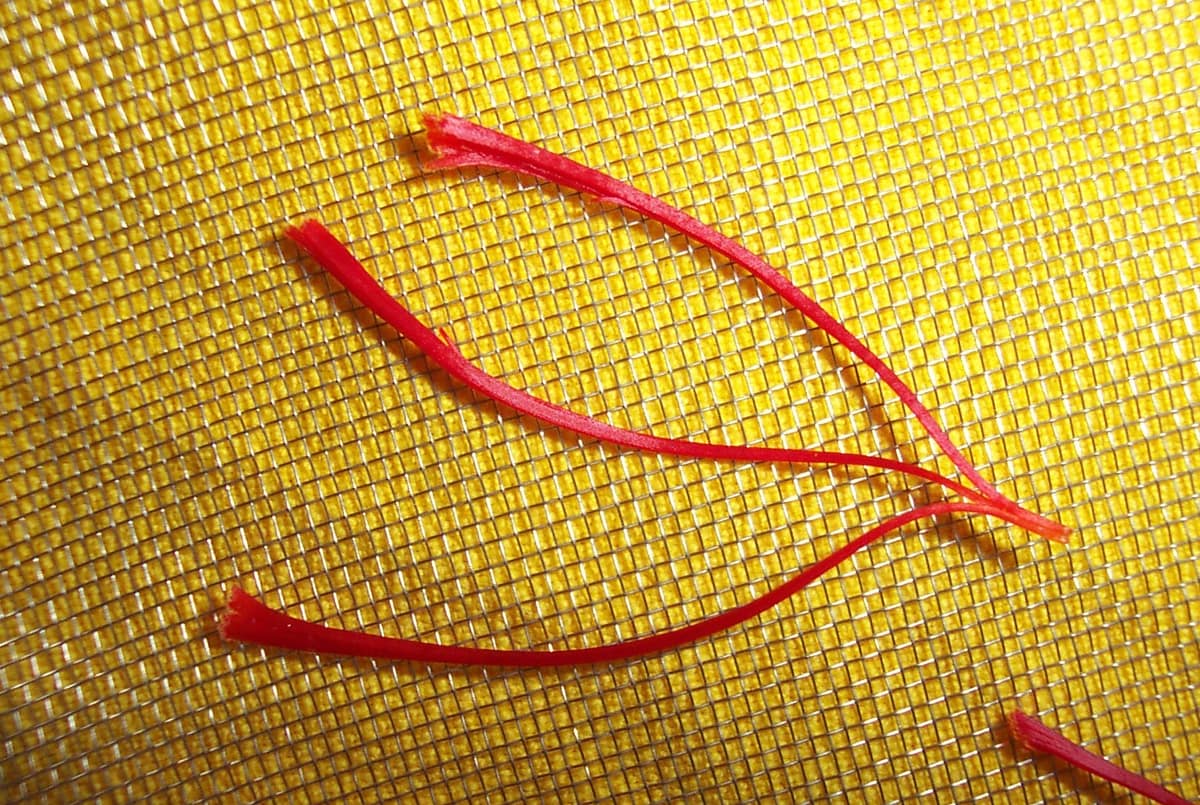
Three stigmas per flower, picked by hand. That is the whole reason saffron costs what it does. Photo: Emilie40 Vanilla comes from the seed pod of an orchid, and outside its native range in Mexico the flower has no natural pollinator. Nearly all the world's vanilla is pollinated by hand, one flower at a time, on the single morning it opens.
Nutmeg and mace are two different spices harvested from the same fruit. Nutmeg is the seed; mace is the lacy red aril wrapped around it.
Cinnamon is bark. Harvesters strip the inner bark from young shoots of Cinnamomum trees, and it curls into quills as it dries.
Chilli heat is capsaicin triggering the same nerve receptor that responds to actual burning, so the pain is real even though nothing is damaged. Birds lack the sensitive version of that receptor, which is how chilli plants get their seeds distributed intact.
Salt is the only rock humans eat. Every other seasoning on the shelf came from something that was once alive.
Black, green and white peppercorns all come from the same plant, Piper nigrum. The differences are in timing and processing: green is picked unripe, black is unripe and dried until the skin blackens, white is ripe fruit with the outer layer removed.
Most cheese is set with chymosin, the enzyme originally scraped from calf stomachs. Since 1990 the bulk of it has been produced by microbes carrying the gene instead, which made cheese one of the first foods made with a genetically engineered ingredient.
Source: US Food and Drug Administration
Being able to digest milk sugar as an adult is the unusual condition, not the normal one. Most of the world's adults produce little lactase after childhood, and the persistence of the enzyme is a relatively recent genetic development in a minority of populations.
Source: US National Institutes of Health
For a product to be sold as yogurt under international food standards it has to be fermented with two specific bacteria, Lactobacillus delbrueckii subsp. bulgaricus and Streptococcus thermophilus, working together.
Source: Codex Alimentarius
Umami was identified in 1908 by the Japanese chemist Kikunae Ikeda, who isolated glutamate from kelp broth and worked out that it was a distinct taste rather than a blend of the other four.
The red liquid in a package of steak is not blood. It is water mixed with myoglobin, the pigment that stores oxygen in muscle tissue, and nearly all the blood is removed at slaughter.
Ham and bacon stay pink after cooking because curing salts convert the muscle pigment into nitrosomyoglobin, which holds its colour under heat. Uncured pork simply goes grey-brown.
The domestic chicken descends mainly from the red junglefowl of South and Southeast Asia, and it is now by a wide margin the most numerous bird on the planet.
Source: Food and Agriculture Organization
Bluefin tuna are partly warm-blooded. A heat-exchange network of blood vessels keeps their swimming muscles above the temperature of the surrounding ocean, which is unusual for a fish and useful for a long-distance hunter.
Sushi began as a preservation method. Fish was packed in salted rice and left to ferment for months, and the rice was thrown away before eating; the vinegared rice you eat today is a much later shortcut.
Cacao seeds fresh from the pod taste nothing like chocolate. They are piled up with their pulp and fermented for several days first, and that fermentation is where the flavour precursors of chocolate are created.
The fortune cookie is not Chinese. It descends from a Japanese cracker tradition and was popularised by bakeries in California, which is why it is largely unknown in China.
Honey does not spoil. It is too acidic and too low in available water for microbes to grow, and an enzyme added by the bees slowly generates hydrogen peroxide as a bonus.
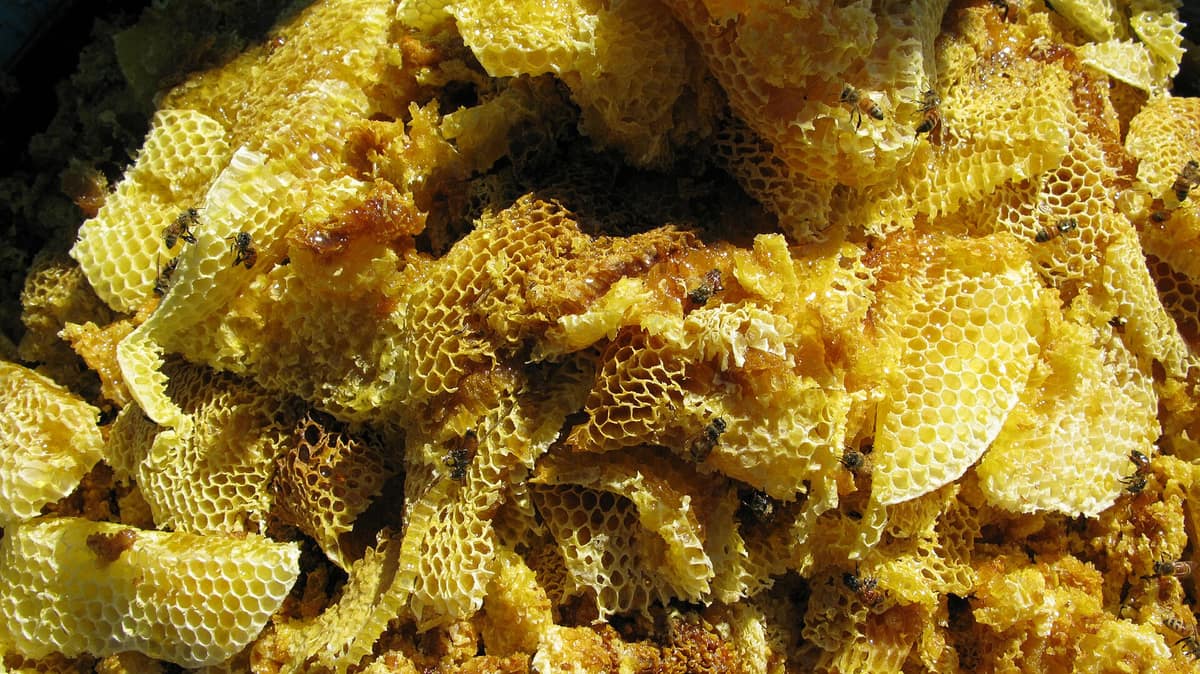
Too acidic and too dry for microbes. Sealed honey simply does not spoil. Photo: Vyacheslav Argenberg Maple syrup starts out as sap that is roughly 2 percent sugar. Boiling off the rest means about 40 litres of sap for every litre of finished syrup.
Source: US Department of Agriculture
Coffee beans are not beans. They are the seeds of a small fruit, and the two main commercial species differ sharply in the cup: robusta carries roughly twice the caffeine of arabica.
Green, oolong, black and white tea all come from one plant, Camellia sinensis. The differences come from how long the picked leaves are allowed to oxidise before the process is halted with heat.
Soy sauce, miso, sake and rice vinegar all begin with the same mould, Aspergillus oryzae, grown on grain. Japan's national brewing body formally designated it the country's national fungus.
Source: Brewing Society of Japan
Ketchup started out in Asia as a fermented fish sauce, and the name traces back through Hokkien Chinese. English versions were made with mushrooms, walnuts or oysters for over a century before tomatoes took over in the 1800s.