
Fun Facts About History
History is not a straight line and it is rarely dignified. Forty facts about the wars, the inventions and the accidents of timing that turned out to matter.
Cleopatra lived closer in time to the first Moon landing than to the building of the Great Pyramid of Giza. The pyramid was already about 2,500 years old when she was born.
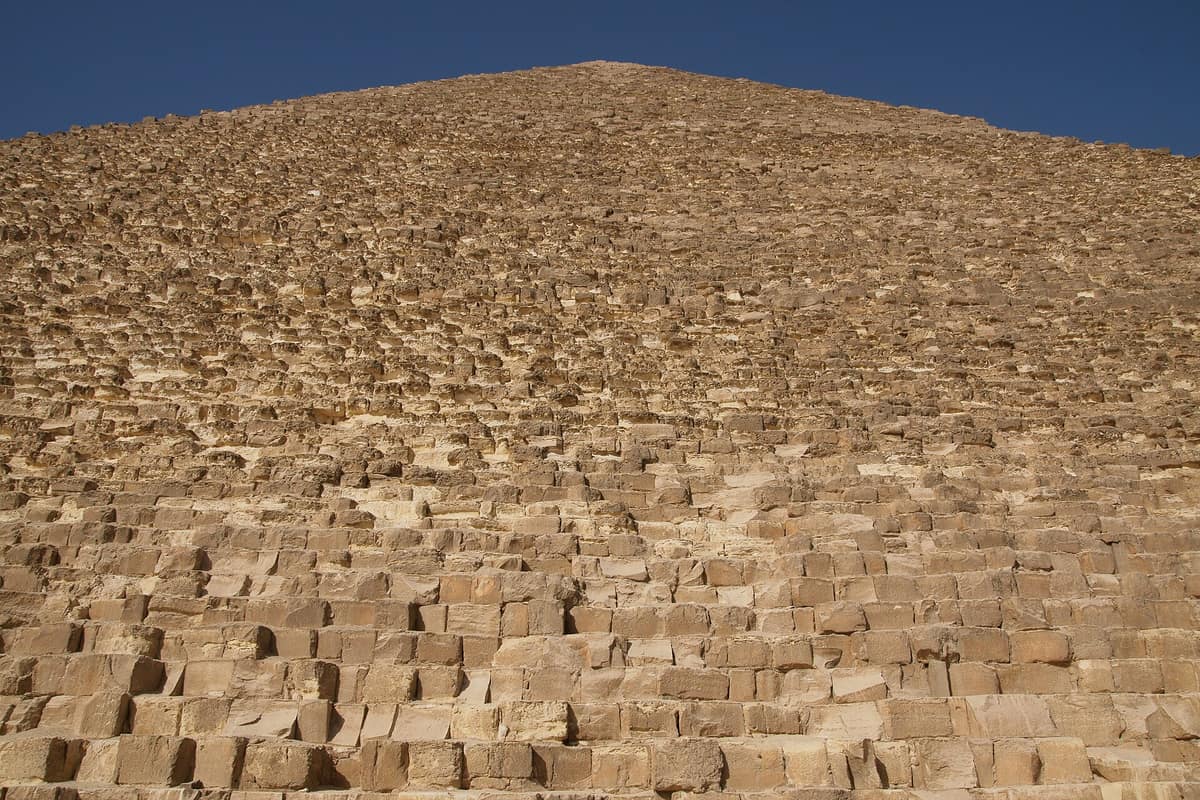
The Great Pyramid was already about 2,500 years old when Cleopatra was born. Photo: kallerna A small population of woolly mammoths survived on Wrangel Island in the Arctic Ocean until roughly 4,000 years ago. The Great Pyramid was standing while they were still alive.
Source: Natural History Museum, London
The first author in history known by name is Enheduanna, a high priestess in Mesopotamia who wrote hymns in Sumerian around 2300 BC. She signed her work, which is why we know her at all.
Source: British Museum
The oldest known written customer complaint is a Babylonian clay tablet from about 1750 BC, in which a man named Nanni informs the merchant Ea-nasir that the copper he delivered was of unacceptable quality. It now sits in the British Museum.
Source: British Museum
Sudan contains more ancient pyramids than Egypt does. The Kushite rulers of Nubia built over 200 of them, and for about a century starting around 747 BC those same rulers governed Egypt as its 25th Dynasty.
Source: British Museum
Excavations at Giza have uncovered a purpose-built settlement for the pyramid builders, complete with industrial bakeries, breweries and cemeteries. The workforce was organised, fed, housed and buried with honours near the monuments they raised.
Source: Ancient Egypt Research Associates
The Antikythera mechanism, recovered from a Greek shipwreck in 1901, is a bronze geared device from roughly the 2nd century BC that modelled the movements of the Sun, Moon and planets and predicted eclipses. Nothing of comparable complexity is known for the next thousand years.
Source: National Archaeological Museum, Athens
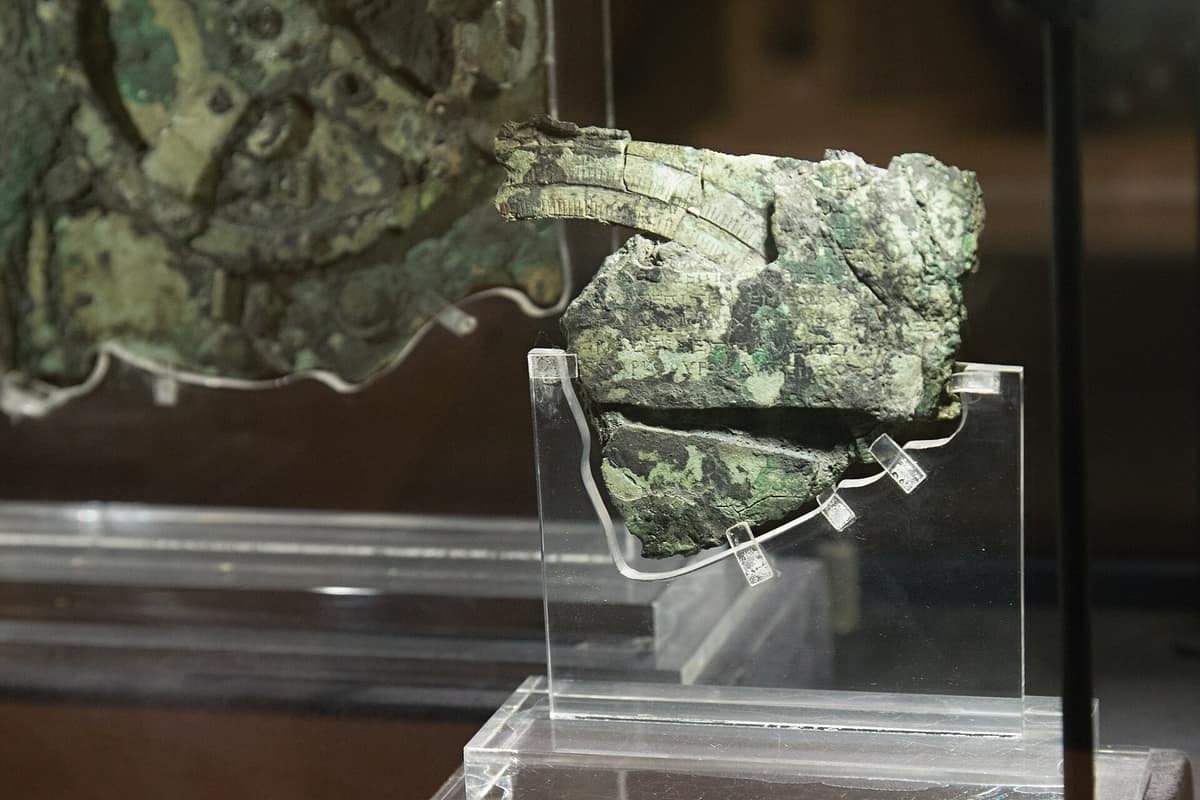
The Antikythera mechanism: bronze gearing that modelled the sky, lost for two millennia. Photo: Zde The Colossus of Rhodes, one of the Seven Wonders of the Ancient World, stood for only about 54 years before an earthquake brought it down around 226 BC. Its ruins reportedly lay where they fell for centuries and were still worth visiting.
Source: Encyclopaedia Britannica
Roughly a third of Pompeii has never been excavated. Archaeologists have deliberately left it buried, on the reasonable theory that future techniques will do a better job than current ones.
Source: Archaeological Park of Pompeii
The Roman Empire did not end in 476. Its eastern half, governed from Constantinople and known to later historians as Byzantine, carried on calling itself Roman until the city fell in 1453 - nearly a thousand years after the western collapse.
The University of al-Qarawiyyin in Fez, Morocco, was founded in 859 by Fatima al-Fihri and is recognised as the oldest continuously operating degree-granting institution in the world.
Source: UNESCO
Iceland's Althing traces its founding to the year 930, when free men gathered at Thingvellir to make law and settle disputes. It is generally counted among the oldest parliamentary institutions still in existence.
Source: UNESCO
Norse settlers reached Newfoundland roughly five centuries before Columbus crossed the Atlantic. Analysis of tree rings in wood cut at L'Anse aux Meadows pins their presence there to the exact year 1021.
Source: Nature, 2021
The world's first government-issued paper money appeared in Sichuan under China's Song dynasty in the early 11th century. Europe would not get around to printing banknotes for another six hundred years.
Source: Encyclopaedia Britannica
Gunpowder was discovered by Chinese alchemists who were, by most accounts, looking for an elixir of immortality. The formula appears in Taoist texts warning practitioners about mixtures that had a habit of catching fire.
Source: Encyclopaedia Britannica
The oldest surviving book printed with movable metal type is the Jikji, produced in Korea in 1377 - about 78 years before Gutenberg's Bible. The surviving volume is held in Paris.
Source: UNESCO Memory of the World
Magna Carta was annulled by the Pope within ten weeks of being sealed in 1215. Of its clauses, only three remain on the English statute book today.
Source: British Library
The Hundred Years' War lasted 116 years, from 1337 to 1453, and was less a single war than a long series of campaigns punctuated by truces that nobody expected to hold.
Teaching was taking place at Oxford by 1096, which means the university was already more than two centuries old when the Aztecs founded Tenochtitlan in 1325.
Source: University of Oxford
When Mansa Musa of Mali passed through Cairo on pilgrimage in 1324, he handed out so much gold that Arab chroniclers writing decades later still blamed him for depressing its value in the city.
Source: Encyclopaedia Britannica
Great Zimbabwe, built between roughly the 11th and 15th centuries, is a city of dry-stone walls assembled entirely without mortar. Its great enclosure wall runs some 250 metres around and stands over nine metres high in places.
Source: UNESCO
Angkor Wat, begun in the early 12th century as a Hindu temple and later used as a Buddhist one, is the largest religious monument in the world. The wider city of Angkor sprawled across an area comparable to a modern metropolis.
Source: UNESCO
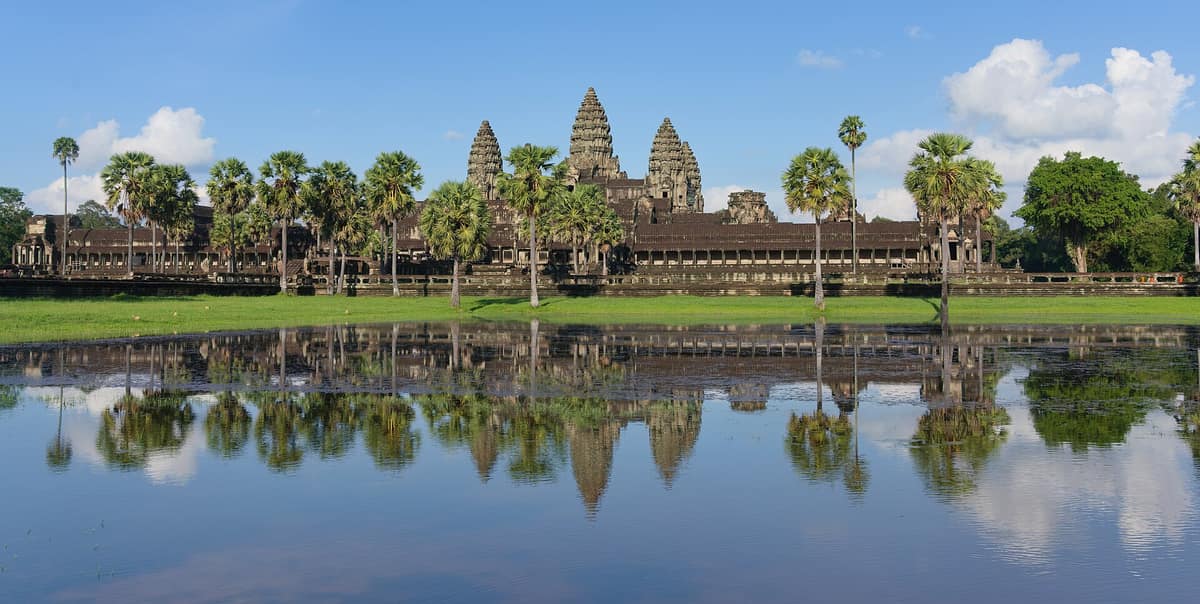
Angkor Wat, the largest religious monument in the world, begun in the 12th century. Photo: Satdeep Gill Between 1405 and 1433 the Chinese admiral Zheng He led seven state-sponsored fleets as far as Arabia and the east coast of Africa. One expedition brought a giraffe back to the imperial court, where it caused a considerable stir.
Source: Encyclopaedia Britannica
The Mongol Empire was the largest contiguous land empire in history, stretching from Korea to the edge of central Europe at its height in the 13th century. Only the British Empire covered more territory overall, and that was scattered across oceans.
Source: Encyclopaedia Britannica
The Great Wall of China is not one wall but a network of fortifications built and rebuilt by successive dynasties over some two thousand years. The photogenic stone sections most visitors walk on date from the Ming dynasty, after 1368.
Source: UNESCO
The Inca ran an empire of millions without a writing system as we would recognise it, using knotted cord records called quipu and a road network of roughly 30,000 kilometres carried by relay runners.
Source: UNESCO
Cacao beans served as currency in Aztec Mexico, with fixed exchange rates against goods and labour. Counterfeiting existed: forgers hollowed out the shells and refilled them with earth.
Source: Encyclopaedia Britannica
More ships of the Spanish Armada were lost to storms while retreating around Scotland and Ireland in 1588 than were sunk by English guns in the Channel.
Source: Royal Museums Greenwich
For more than two centuries Japan restricted foreign contact almost entirely, with a single Dutch trading post at Nagasaki as the main window on Europe. The policy ended after Commodore Perry's squadron arrived in 1853.
Source: Encyclopaedia Britannica
Revolutionary France replaced the calendar as well as the monarchy, introducing twelve 30-day months divided into three ten-day weeks, with five spare days at the end of the year. The scheme lasted about twelve years before Napoleon quietly restored the old one.
Source: Encyclopaedia Britannica
The fax machine is older than the telephone. Alexander Bain patented a device for transmitting images over wire in 1843, more than three decades before Bell patented voice transmission.
Source: Encyclopaedia Britannica
In 1843 Ada Lovelace published notes on Charles Babbage's Analytical Engine that included a step-by-step method for the machine to calculate Bernoulli numbers - widely regarded as the first published algorithm intended for a computer. The machine itself was never built.
Source: Science Museum, London
The world's first underground railway opened in London in 1863 and was hauled by steam locomotives through tunnels lit by gas. Ventilation was, by all accounts, the chief topic of passenger conversation.
Source: London Transport Museum
The shortest war on record is the Anglo-Zanzibar War of 1896, which lasted roughly 38 minutes from the opening shots to the surrender.
Source: Guinness World Records
The Eiffel Tower was built for the 1889 World's Fair with a permit lasting twenty years, after which it was to be dismantled. It survived largely because it made an excellent antenna and the French army found it useful.
Source: Societe d'Exploitation de la Tour Eiffel
Nintendo was founded in Kyoto in 1889 to manufacture hanafuda playing cards. It spent its first seventy years in the paper business before it went anywhere near electronics.
Source: Nintendo
The Wright brothers' first powered flight in 1903 covered about 120 feet - a shorter distance than the wingspan of a Boeing 747. The whole thing lasted twelve seconds.
Source: Smithsonian National Air and Space Museum
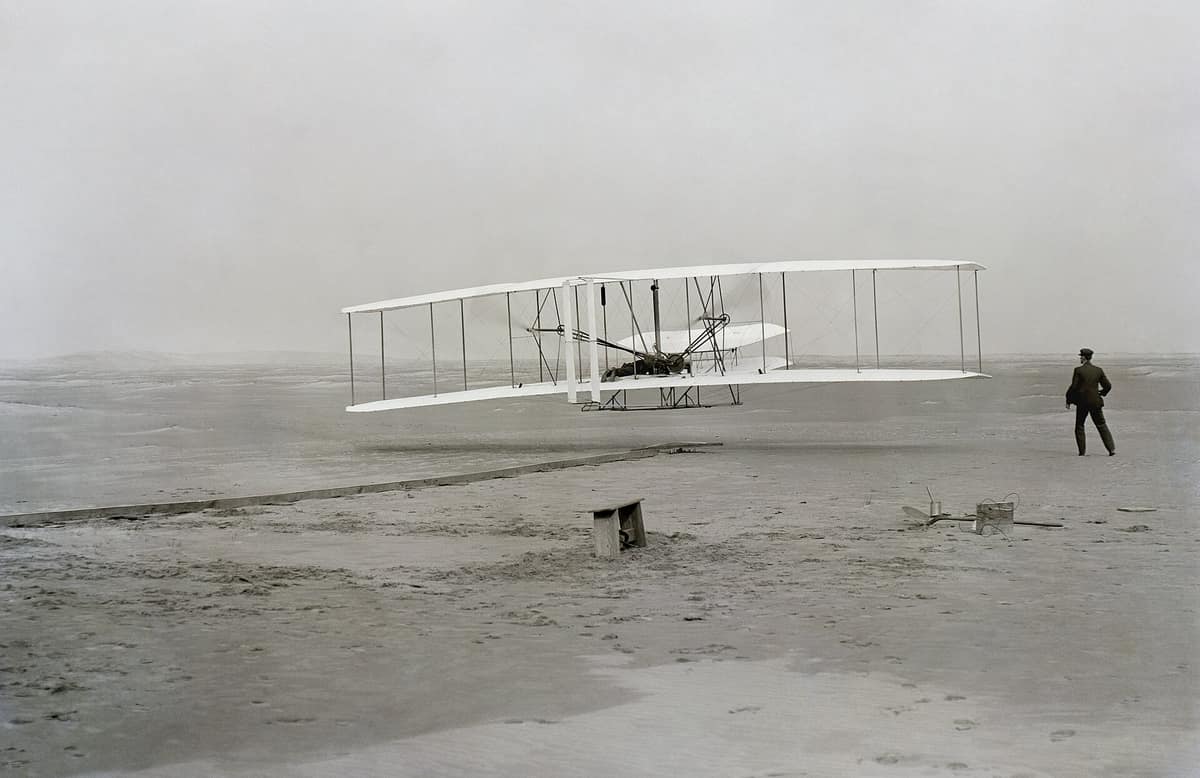
Kitty Hawk, 17 December 1903. The first flight covered less ground than a 747 wingspan. Photo: John T. Daniels Colossus, the programmable electronic computer built at Bletchley Park in 1943 to attack German cipher traffic, remained an official secret for three decades. Its designers watched others be credited with inventing the electronic computer and said nothing.
Source: The National Museum of Computing, Bletchley Park
The first message sent over ARPANET, the network that became the internet, was meant to be the word LOGIN. The system crashed after two letters, so the first thing the internet ever said was LO.
Source: UCLA
The computer that guided Apollo 11 to the Moon had roughly four kilobytes of erasable memory. Its astronauts flew a quarter of a million miles on less working memory than a modern email signature.
Source: NASA